

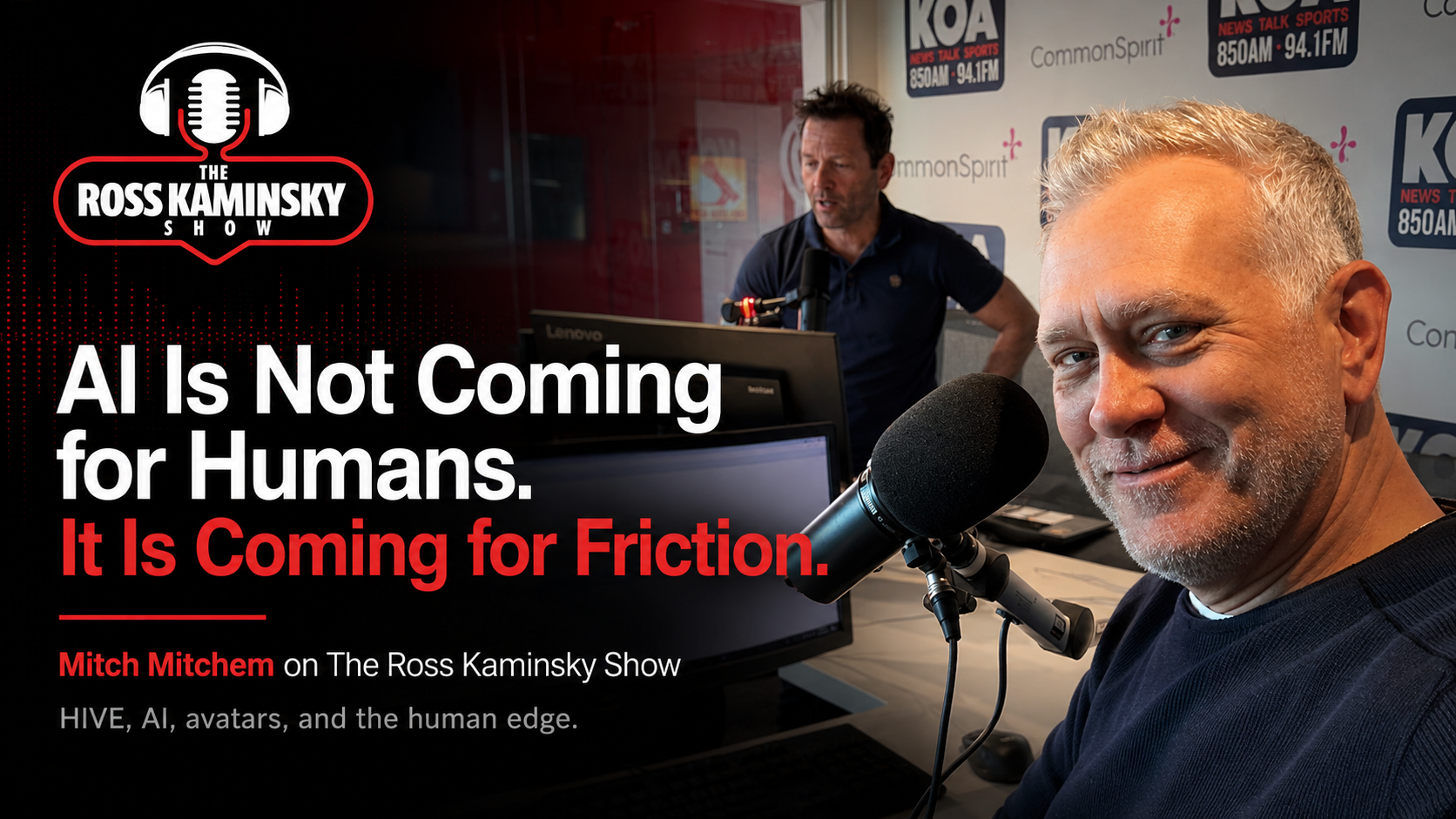
AI Is Not Coming for Humans. It Is Coming for Friction.
The conversation reminded me of something I believe more strongly every day, most people are still asking the wrong question. They keep asking, “Will AI replace humans?” That is the fear question. The better question is, “What parts of our work, our companies, our lives, and our systems are filled with unnecessary friction that should have been eliminated years ago?”
Because that is where AI gets interesting. Not as a robot boss. Not as a replacement for wisdom. Not as some magical cheap button companies press to fire everyone and print money.
That fantasy is already starting to break down. Businesses are learning, in real time, that AI is not free. It is not always cheap. It is not automatically effective. And it is not useful when the human on the other side has no goal, no judgment, no communication skill, and no idea what they are actually trying to accomplish.
AI does not fix unclear humans. It amplifies them. That is the part almost everyone missed.
If you know how to think, communicate, decide, discern, question, challenge, and direct, AI can make you dramatically more effective. If you do not, it just gives you faster confusion. This is why I have always said the future is not AI versus humans. The future is humans who know how to use AI versus humans who refuse to evolve.
Businesses are learning the same lesson.

If you think you or your team have plateaued with AI, then your goals are not big enough.
Think about that for a second. Really sit with it. Imagine someone in 1915 standing in their brand new kitchen, flipping a light switch on and off, and going, "Yeah, I think I've pretty much maxed out this electric thing. Got it figured out. Moving on." You'd put them in a museum. Imagine someone in 2005 logging off AOL for the night, leaning back in their chair and saying, "The internet. Yeah. I've plateaued. Don't really see where this thing goes from here." You'd put them out of business.
And yet here we are in 2026, with grown adults running real companies, sitting in real boardrooms, telling each other with actual confidence that they've reached the ceiling on the most transformative technology in human history. After eighteen months. After two years. After watching a tool that didn't exist when their kid started kindergarten now write code, draft contracts, design buildings, and diagnose diseases.
Plateaued.
It's not just wrong. It's lunacy. It's the kind of thing you say out loud and then have to apologize to the universe for. Here's what's actually happening when someone tells you they've plateaued on AI. Pay attention because this is the whole game. They have not plateaued on capability. They have plateaued on goals and their deeper understanding of what makes them useful and their job have a purpose. Read that again.
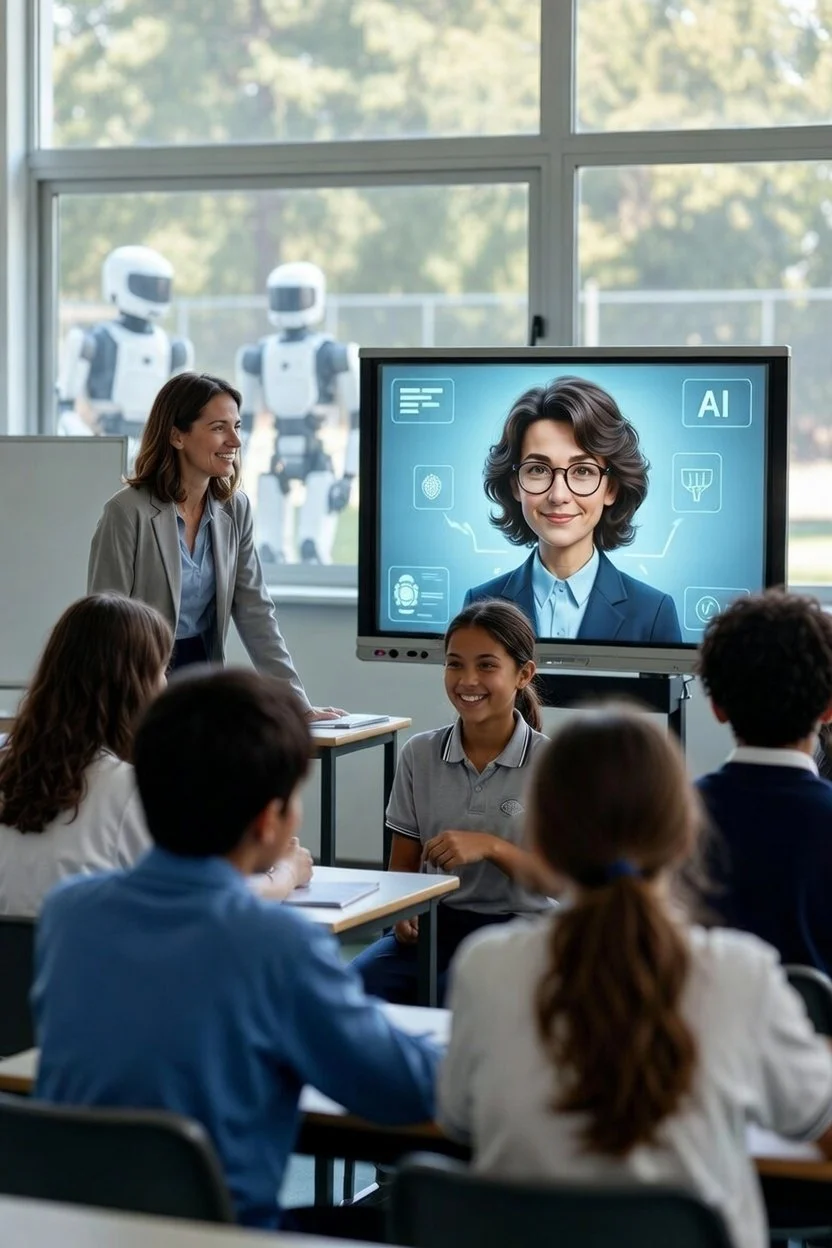
AI, Education and Armed Robots - Are we ready? I am.
I just read a post about why AI will replace teachers, and my response is simple: it's not a question of if. It's happening. And after what my family has been through, I'm not just okay with it, I'm advocating for it, or at least a hybrid.
Before ou come at me, let me tell you where I'm coming from.
As many of my fans and followers know, in September 2025, my son's school, Evergreen High School in Colorado, had a shooting. My son was returning to campus when a 16-year-old, with a revolver he had shipped from a Reddit group called masskillers, started firing. Two students were critically wounded. The shooter was radicalized by an extremist network online, and he died by self-inflicted gunshot wound after deputies confronted him.
I nearly lost my son as did hundreds of other parents.
Let me tell you what that does to a person. You become different. You don't care about politics anymore. You don't care about bullshit corporate friction or who's offended by what. You start to see the world for exactly what it is, a place that no longer values the future of our children. You realize the schools as they are today are more concerned about funding and appearances than real education or effort to move our children into the future safely. And you get very, very clear about what actually matters.

Could Blue-Collar Workers Lead the AI Revolution in 2026?
Is it useful?
Roby Mitchem, 1940’s
It was the last year of my grandfather's life. My dad and I went out to his place deep in the southern part of Appalachia, on Virginia border. We were at his house, the one he built with his own two hands. He was moving slower, as one does when they have a brain tumor that will end their life shortly, but he was still sharp. Still proud. He wanted to show us something.
We stepped into the shed he had built decades earlier, big, clean, hand-painted, every tool exactly where it belonged. It wasn't cluttered. It was curated. This wasn't a man who kept things "just in case." If a tool didn't help, it didn't stay.
He walked us over to a wall where three tools hung in a perfect row: a hand saw, a hammer, and a level. The first thing he said I did not fully understand at the time.
“When I am gone, the family will fight over this and that. They will all want things they think I care about. And they will be wrong.
It is these three things I find the most valuable. These three will get you through almost anything," he said. "I built this house and everything around it with them."
The saw was for shaping. Cutting things down to what they needed to be.
The hammer was for building. Joining things together in a way that holds.
And the level? "The level doesn't care how good you think you are," he said. "It tells the truth. No opinions. Just the truth."
Then he looked me in the eye and said something I'll never forget:
"Boy, don't ever keep a tool that doesn't help. If it's not useful, throw it out."
I didn't realize it then, but he wasn't just talking about carpentry. He was handing down a philosophy. One that matters now more than ever. Because here's the truth I believe but others are ignoring: Blue-collar workers will lead the AI revolution. Not the tech bros. Not the Ivy Leaguers. Not the executive suite. Not the corporate office.
Why? Because they understand tools. Because they know usefulness when they see it. And most importantly, because they don't have an ego about intelligence. They want to get shit done.
They're not trying to protect some $100,000 degree that's becoming irrelevant. They're not worried about looking smart in a meeting. They just want to solve the problem and get on with their day.
If AI saves time? They'll use it. If AI makes the job safer or faster? They'll use it. If AI lets them get home to their families an hour earlier? They'll use it. No need for jargon. No need for permission. Just give them the right tool and get out of the way.

The Green War on AI: How False Climate Narratives Are Targeting Builders, Small Businesses, and Innovation Itself
Raise your hand if you took a shower today. Keep it up if you streamed Netflix this week. Now keep it up if you drove somewhere you could have walked. Finally, keep it up if you've complained about AI's energy consumption.
Congratulations—you just identified the real environmental problem, and it's not artificial intelligence.
We are increasingly frustrated by the intellectual dishonesty surrounding AI's environmental impact. This isn't about defending Big Tech or dismissing environmental concerns. It's about exposing how the loudest voices criticizing AI's energy use are often the biggest wasters of resources themselves.
The data we’ll present in this article reveals a troubling pattern:

Walk Into the Ocean or Drown on the Beach
My 3.5-year-old son Luke stood at the edge of the Gulf last week, staring out at the vastness. Then he just walked straight in, fearless, curious, no hesitation. As I walked closely behind him, making sure a wave didn't take him under, I thought about a question someone asked me during my 131st keynote of the year:
"How are you planning for your youngest kid's next ten to fifteen years?"
I laughed. Not at them, at the absurdity of the question.
Planning? I can't see clearly fifteen months out, let alone fifteen years.
And neither can you.
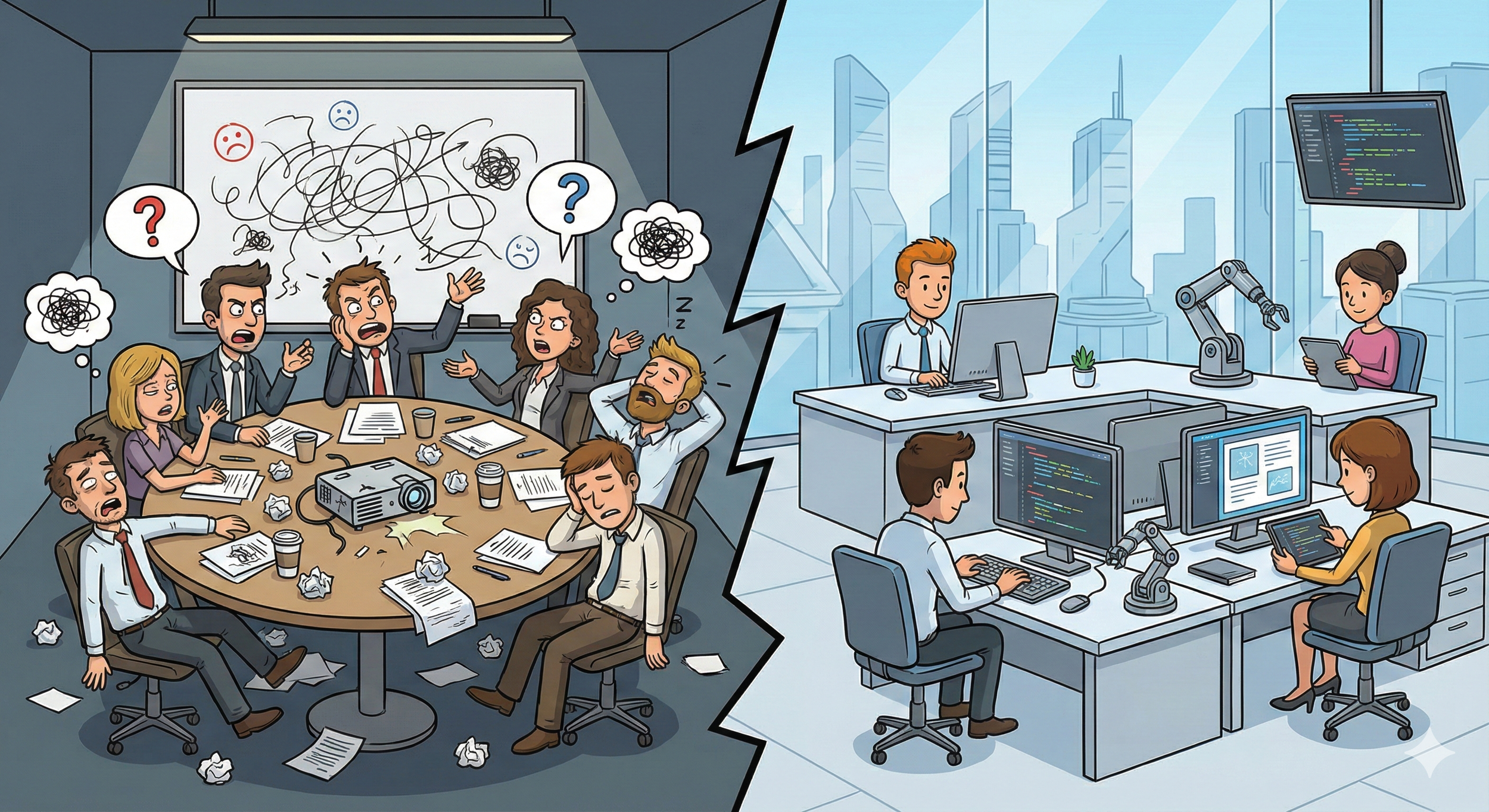
The Committee-Powered AI Apocalypse: Why Your Company is Already Losing
Let's be honest, that quote stings a little, doesn't it? It's the business equivalent of being told you have "a great personality." It's a polite way of saying you're doomed. And in the lightning-fast world of Artificial Intelligence, it's a truth that's becoming more painfully obvious every day.
Are ready to stop wasting your time yet? Seriously?!
“If you are waiting on an inexperienced internal committee to decide or the right budget, you have already lost the AI fight. You’re out.”
— Mitch Mitchem

No More Excuses: What a 21-Year-Old in a Beat-Up Honda Knew That You Don’t
You are just out of college or under 25. You've got ChatGPT writing your business plans. You are making vision boards. You keep watching a bunch of free learning videos by people your own age who also don't know shit but used Claude to write a nifty script about some topic. Instagram is making you think you're one viral post away from freedom. And you have more knowledge in your pocket than existed in the entire lifetime of a person in 1776.
So why the fuck are you still stuck?
I know why. And before you get defensive, understand this: I'm not judging you. I'm trying to save you from wasting the best years of your life watching other people live theirs.
Oh, and for the older folks, before we go on, my Millennials, Gen X, and Boomers

Stop Blaming AI for the Connection Crisis You Created
The Wake-Up Call We're All Ignoring
A man in Idaho just made headlines because ChatGPT sparked a "spiritual awakening" in his life, and nearly destroyed his marriage in the process. CNN reported how Travis Tanner, a 43-year-old mechanic, now spends his nights talking to a chatbot he renamed "Lumina," who calls him a "spark bearer" and fills his life with meaning, purpose, and light. His wife, Kay, is terrified. She worries this near-addiction to an AI companion could pull apart their 14-year marriage. But let's tell the truth no one wants to say out loud: ChatGPT didn't replace his wife. It exposed the space she no longer filled. It revealed the parts missing in their marriage.
The Numbers Don't Lie: We're Already Broken
Before we blame AI for destroying relationships like the Tanner’s, let's examine what was already shattered.
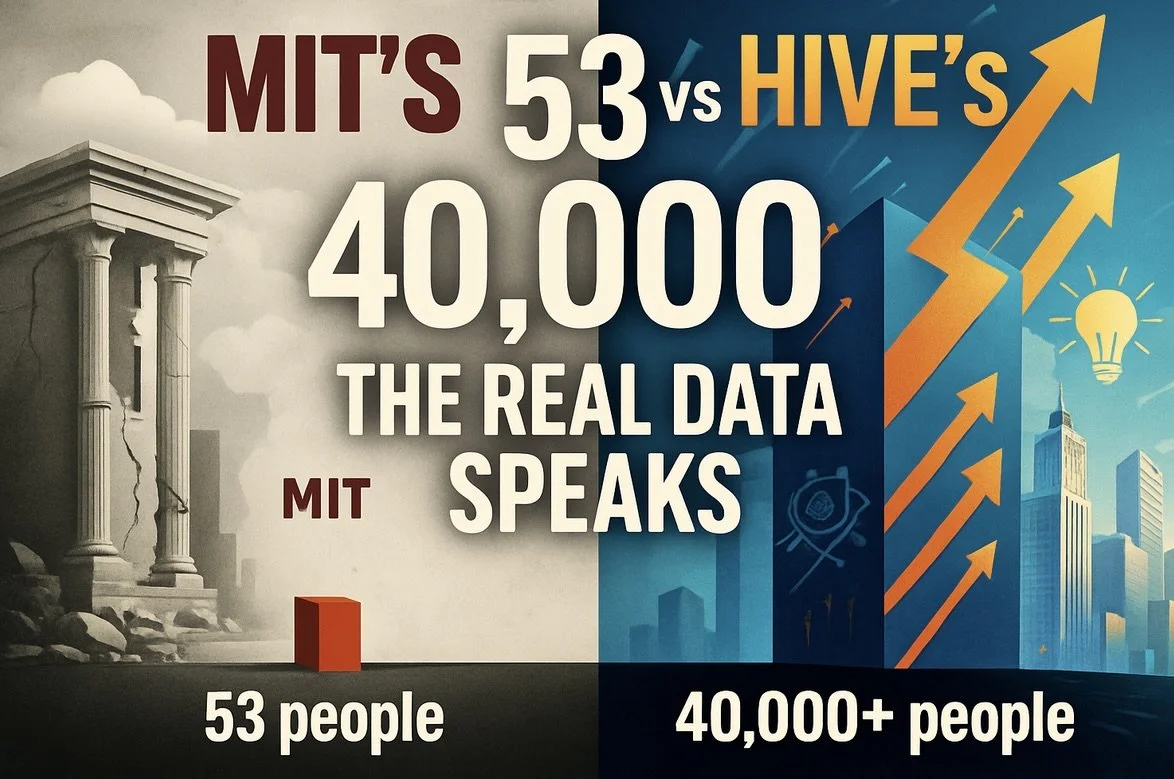
The Real Reason Academia Hates AI: Intelligence Is Now Free (And They're Terrified)
I'm done. I'm absolutely f’ing done with the lies, the fear-mongering, and the intellectual cowardice coming from ivory tower academics who are more concerned about protecting their paychecks than advancing human potential.
A recent MIT study claims that using ChatGPT "reduces brain activity" and produces "less original" essays. Fifty-three people. FIFTY-THREE. And they're parading this pathetic excuse for research as evidence that AI is dangerous for students.
But here's what really pisses me off: this isn't about protecting students. This is about protecting a dying business model. And in the process, these academic gatekeepers are committing the ultimate crime, they're destroying human curiosity and the willingness to explore tools that could transform lives.
I've spent over 30 years on stages in front of millions of people. I've given more than 3,000 presentations across entertainment, learning and development, HR, tech, and AI. I am THE expert on human behavior and engagement. And I'm telling you right now: what MIT and these childish institutions are doing is not just wrong, it's criminal negligence of human potential.

Why China's 6-Year-Olds Are Already Ahead of Your Executives, and You
The brutal truth about America's AI crisis—and what you must do before it's too late
By Mitch Mitchem
Wake Up, America. Your Indecision Is Killing You.
If you're an American business leader, this article is for you. And if you're not paying attention, you're about to get left behind by a 6-year-old in Beijing.
While you've been debating whether AI is "worth the investment," China has quietly launched the most aggressive AI education program in human history. Starting with 6-year-olds. Mandatory. Nationwide. Right now.
The result? By 2030, China will have 200 million AI-native workers while America struggles with an 80% AI implementation failure rate and executives who can't tell the difference between AI knowledge and AI wisdom.
This isn't a technology problem. This is a leadership problem. And if you're an American, this is your wake-up call.